

Pigmentation & Melasma Treatment in Goa: Targeting Melanin with Precision Dermatology
Pigmentation is complex and requires specialized care. Dr. Swati Divyal Pai offers a research-driven, multi-modal approach to correct stubborn dark spots, melasma, and sun damage in Canacona, Margao, and Panjim.
Coastal UV, Salt Air & Tropical Pigmentation
Why Pigmentation & Melasma Are Harder to Treat in Goa’s Coastal Climate
Goa’s high UV index, reflection off water, intense humidity, and salt air create the perfect storm for persistent hyperpigmentation, melasma, and sunspots:
Heat & UV Triggered Melanin: Standard skin-lightening creams fail in tropical environments because heat and UV rays continuously reactivate melanocytes deep within the dermal layers.
Hormonal & Post-Inflammatory Pigmentation: Melasma (chloasma) and post-acne dark marks (PIH) worsen rapidly in coastal humidity due to ongoing inflammation and barrier compromise.
Risk of Rebound Pigmentation: Aggressive, generic lasers and harsh bleaching agents used elsewhere often trigger severe rebound darkening on tropical Indian skin tones (Fitzpatrick IV–VI).
The Skininfinity Pigmentation Shield: Dr. Swati Pai utilizes sun-safe, non-ablative pico/nano laser technology, medical-grade peels, and barrier-restoring topicals tailored specifically for Goan climate exposure.
Comprehensive Pigmentation Protocols (Margao, Canacona & Panjim)
Advanced Pigmentation & Spot Removal Solutions in South & North Goa
Our clinics across Canacona, Margao, and Panjim offer target-specific pigmentation correction without damaging your natural skin tone:
Melasma & Chloasma Control: Combination therapy targeting both vascular and epidermal components of hormonal melasma to prevent dark patches from returning.
Sunspot, Freckle & Age Spot Removal: Q-switched laser energy and targeted light therapies to break down localized excess melanin without scab formation or downtime.
Post-Inflammatory Hyperpigmentation (PIH): Specialized chemical peels and exosome treatments to erase dark marks left behind by acne, burns, or insect bites.
Tanning & Uneven Skin Tone Correction: Medical-grade antioxidant infusions, medifacials, and gentle enzymatic exfoliations to restore uniform brightness.
Labiomental & Perioral Darkening: Targeted depigmentation protocols for stubborn dark shading around the mouth, chin, and neck lines.
Understanding Hyperpigmentation: The Role of Melanocytes and Triggers
Hyperpigmentation is caused by the overproduction of melanin by cells called melanocytes. Effective treatment relies entirely on diagnosing the type and depth of the pigment. Our initial consultation involves a Wood’s Lamp or VISIA analysis to classify the condition precisely:
Melasma (The Hormonal and Heat Trigger)
Characterized by patchy, brown-to-gray-brown discoloration, usually on the face. Melasma is often linked to hormonal changes (pregnancy, birth control) but is severely worsened by UV exposure and Heat (Infrared Radiation), making it a critical concern in the Goan climate. Requires long-term management.
Post-Inflammatory Hyperpigmentation
Dark spots that remain after an injury, such as acne lesions, rashes, or minor burns. PIH is common on Indian skin (Fitzpatrick Types III-V) and is an inflammatory response that must be treated gently to avoid re-triggering the pigment.
Solar Lentigines (Sun Spots/Age Spots)
Well-defined, typically small brown spots resulting from cumulative, long-term UV exposure. These are usually superficial (epidermal) and respond well to targeted therapies.
Customized Pigmentation Correction at Skinfinity: A Multi-Modal Approach
Due to the stubborn nature of melanin, especially in the dermis, Dr. Pai utilizes a combination of advanced treatments, each targeting a different layer or pathway of pigment formation.
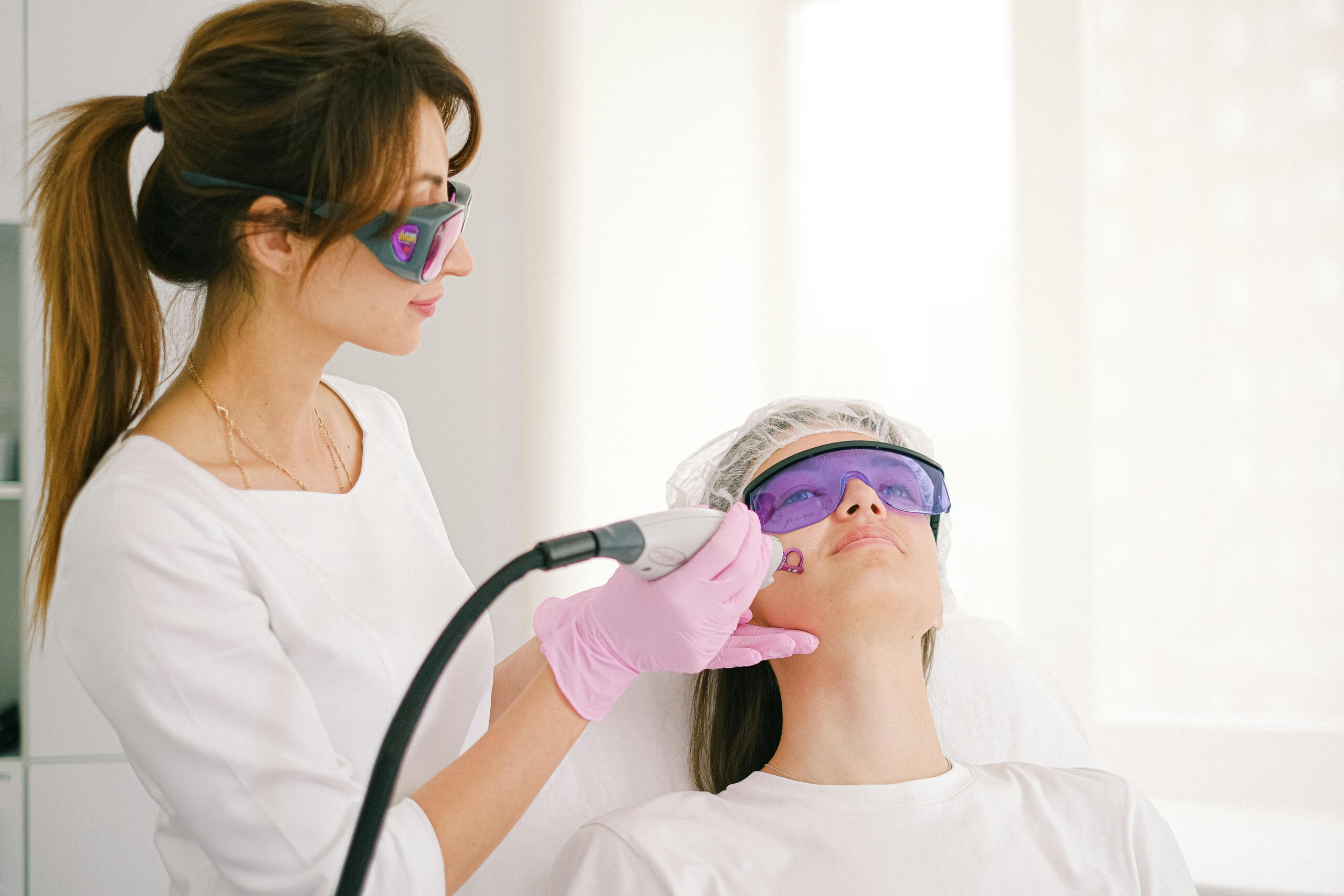
Q-Switched Nd:YAG Laser (Low Fluence)
This is the gold standard for many deep pigments. The Q-Switched laser delivers high-power energy in extremely short pulses (nanoseconds), shattering the excess melanin into tiny particles that the body naturally removes. We utilize a low-fluence protocol specifically for Melasma to prevent the rebound hyperpigmentation seen with aggressive laser settings.

Advanced Medical-Grade Chemical Peels
We utilize specific peels containing ingredients like Mandelic Acid, Lactic Acid, and Azeloyl Glycine. These target the epidermal layer, speeding up skin turnover and inhibiting the tyrosinase enzyme (which is key to melanin production) without causing significant inflammation.
Depigmenting Systems (Cosmelan/Demelan)
For moderate to severe Melasma, we may prescribe professional depigmenting masks and home-care systems like Cosmelan. These systems contain potent, regulated active ingredients to suppress melanin production long-term and manage the condition effectively.
The Skinfinity Advantage: Why Diagnosis is Everything
Precise Pigment Depth Analysis
Melasma can be epidermal, dermal, or mixed. A treatment that works on superficial pigment (Epidermal) will fail on deep pigment (Dermal). Our advanced VISIA Skin Analysis is non-negotiable. It scientifically determines the exact depth and layer of melanin, allowing us to select the precise laser wavelength and peel concentration required for efficacy and safety on Indian skin.
Systemic Management: Nutrition and Hormonal Factors
Dr. Swati Pai’s background in Clinical Nutrition & Dietetics is vital for pigmentation. She investigates systemic factors like diet, gut health, and hormonal balance (often overlooked by laser-only clinics) to manage pigmentation from the inside out, reducing the likelihood of recurrence.
Localized Patient Results & Transformations
Pigmentation & Melasma Transformations Across Our Goa Clinics
Clinical outcomes managed by Dr. Swati Pai across South & North Goa:
| Pigmentation Type | Customized Treatment Protocol | Clinic Location |
| Deep Epidermal & Dermal Melasma | Depigmenting Peels + Low-Fluence Laser Therapy | Margao Center |
| Sun Damage & Stubborn Freckles | Target Q-Switched Pigment Laser | Canacona Clinic |
| Post-Acne Dark Spots (PIH) | Salicylic-Mandelic Peel + Exosome Repair | Panjim / Margao |
Frequently Asked Questions: Melasma & Pigmentation Treatment in Goa
Q: Why does my melasma or pigmentation keep coming back in Goa?
A: Goa’s heat, humidity, and intense sun exposure constantly stimulate melanocytes (pigment-producing cells) to produce extra melanin. Permanent results require controlling internal inflammation (via diet and hormonal balance) while protecting the skin barrier externally with tropical-strength broad-spectrum sun defense.
Q: Is laser treatment for pigmentation safe for Indian skin in Goan sun?
A: Yes, when performed with appropriate low-fluence settings and Indian-skin-safe laser wavelengths. Dr. Swati Pai uses precision-targeted laser modalities that shatter melanin pigment beneath the surface without causing surface heat damage or post-laser dark spots.
Q: How many sessions will I need to clear dark spots or melasma at your Margao or Canacona clinic?
A: Surface sunspots and light tanning often improve within 2 to 3 sessions. Deeper dermal pigmentation and chronic melasma typically require 4 to 6 sessions combining medical peels, targeted lasers, and internal metabolic care.
Q: What is the cost of pigmentation and melasma treatment in Goa at Skininfinity?
A: Pricing depends on the type of pigmentation (melasma vs. sunspots vs. PIH), the surface area involved, and the combination of laser, peel, and exosome therapies required. After an AI skin analysis, Dr. Swati provides a clear, tailored treatment roadmap and cost estimate.
Q: Can I continue pigmentation treatments during the Goan summer or monsoon?
A: Absolutely. We adjust our clinical protocols seasonally. During high-UV summer and humid monsoon months, we utilize monsoon-safe chemical peels, gentle light therapies, and oral/topical antioxidants that brighten skin safely without sun sensitivity.
What is melasma?
Melasma is a common skin condition characterized by brown or gray-brown patches on the face, primarily affecting the cheeks, forehead, nose, and upper lip. It often occurs due to hormonal changes, sun exposure, and genetics.
What causes pigmentation issues?
Pigmentation issues can arise from various factors, including sun exposure, hormonal changes, aging, acne scars, and certain medications.
How is melasma diagnosed?
Diagnosis typically involves a visual examination by a dermatologist, who may also use tools like a Wood’s lamp or skin biopsy to determine the type and depth of pigmentation
What treatment options are available for melasma?
Treatment may include topical creams (like hydroquinone), chemical peels, laser therapy, and microdermabrasion, tailored to the individual’s skin type and severity of the condition.
Can melasma be prevented?
While it may not be completely preventable, using broad-spectrum sunscreen, avoiding direct sun exposure, and following a proper skincare routine can significantly reduce the risk of melasma development.
Stop Chasing Fades. Start Treating the Cause.
Ready to move beyond temporary creams and ineffective treatments? Your path to a clear, even complexion requires an expert diagnosis. Book your comprehensive consultation with Dr. Swati Pai at our Canacona, Margao, or Panjim clinic.